Soap Opera Drama Guided By Sanderson’s Plotting Method
If you follow me on Instagram then you know this year I’m really trying to get my butt into gear with this novel. I know people make these kind of New Year’s resolutions and don’t stick to them (I’m guilty of this too) but dammit this year I am bound and determined.
Since December I’ve been drastically overhauling my story as I’ve come to discover the it will be better served as an adult novel, rather than a young adult horror. I had been on the fence about making this change for years. I love the YA genre and feel passionately about crafting quality books for teens that they can continue to find meaning in as they grow up, but as I myself grew up and my interests changed, so did the story and its subject matter. I know there are plenty of mature stories out there for the teen audience (I grew up in the age of the Crank, Glass, and Burned novels by Ellen Hopkins, though I never read them because my mom said they were too much), but those books were teen centered and mine no longer is.
One thing that has propelled me in this new direction is my interest in cults and true crime. I have watched countless documentaries — especially where these subjects cross paths — and am especially interested in how crime and fanatical belief systems affect communities. I’m also a big fan of soap operas and grew up watching soaps like Days of Our Lives, The Young and the Restless, General Hospital, and Port Charles — the latter having vampires and other Gothic elements. To me there is nothing better than a supernatural, Gothic soap opera, set in a small town full of secrets and taboo crimes.
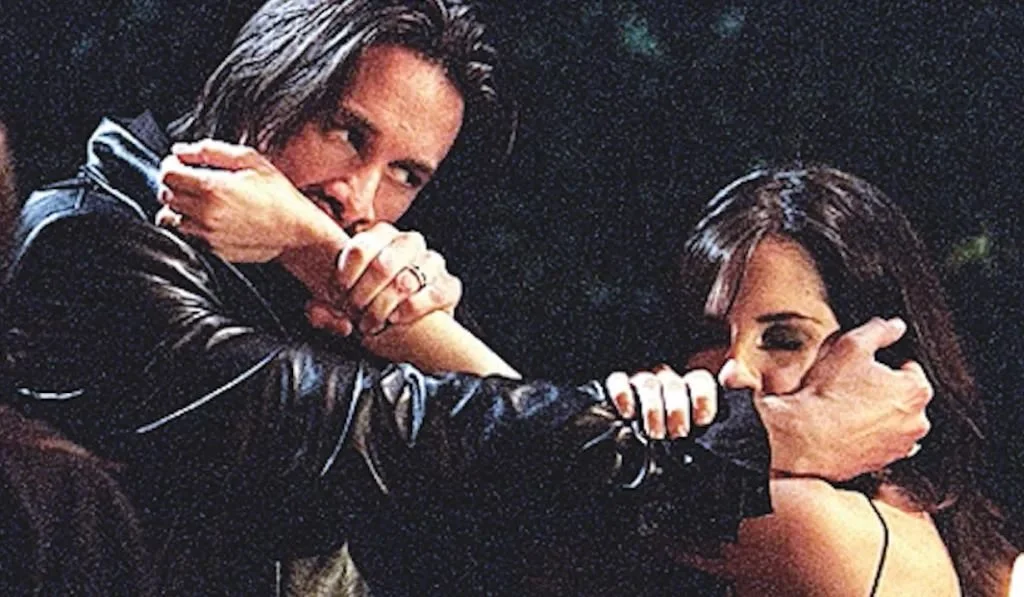
Port Charles
The vampire Caleb Morely (portrayed by Michael Easton) and good girl Livvie Locke (portrayed by Kelly Monaco) had five-year-old me secretly wishing for a vampire boyfriend well before I fell in love with Spike from Buffy the Vampire Slayer.
This is all to say that my major focus over the past few months has been to tightly connect the dots of my plot in more meaningful ways and ensure that my small town feels grounded and that all those plot threads act as the roots that keep the town tightly knit — very much like a soap opera!
I previously wrote about my Novel Writing Planner Notebook and how pleased I was with the Ideas & Inspiration section. Presently I have worked through the sections on Character Development and Setting & World Building, and am now working through the Plot Development section. Now I have to be honest, I really struggle with rigid plot structures. Doesn’t matter if it’s the three-act structure, the seven-point story structure, beat sheets — my brain hates these little check points and boxes. I understand and believe in their beats and rhythms, but when I see things mapped or charted out my creativity putters out. Enter the Brandon Sanderson method of plotting!
Full disclosure: I have never and probably will never read Sanderson’s books. I’m not into his genres, but if the man is going to post his creative writing lectures and story outlines online for free, then you better believe I’m going to take advantage of it. Sanderson has a ton of videos on his YouTube channel, but his video on plot from 2020 literally had me praising him like a god. The video in question is titled: Lecture #3: Plot Part 2 — Brandon Sanderson on Writing Science Fiction and Fantasy. In this video he gives a brief overview to how he outlines, organizing a document into a story overview, setting (physical, magic, culture), character background/arc overview, and plot. I liked this because without realizing it, I had also organized a giant document in this same format.
Before I attempted Sanderson’s method of outlining plot, I tried to follow the scene-mapping method from my tome. writing toolkit (which I definitely think you should look into if you are stuck or need help developing an idea). They have great lessons on how to craft scenes and cut out fluff and encourage writers to write out their scenes on cards so you can shuffle them around. I like this, but found myself creating a trash pile of notecards because I needed to see everything pertaining to my story in front of me simultaneously and my living room just isn’t big enough for all these damn cards.
In his plot lecture, Sanderson explained that he outlines his stories by character, plot archetype, and plot structure. Basically he takes a character and determines what plot archetype their arc is made of. Sometimes it’s multiple arcs — like a heist and a romance. So he’ll look at what the structure of a heist plot requires and the structure that a romance requires, then make a bulleted list of what needs to happen for both, already knowing the outcome or where the characters should end up at the conclusion. I do not know why someone has never explained this to me so simply before, but NO ONE HAS!!!
From there he will organize his outline by chapter and pull these bulleted plot points from multiple characters to say, “I need these things to happen in this chapter, then those to happen in the next one, and so on and so forth”. For me, my chapters are broken up by POV characters and while some POV characters’ plots intertwine very closely with others, I have some that do not overlap until the end. Like a soap opera, there are a lot of moving pieces to this revamped (no pun intended) story of mine and separating plots by character/character arc is revolutionary for me. I cannot begin to describe the rage I feel when trying to figure out what my plot points are using a rigid structure when there is SO MUCH happening — oftentimes simultaneously — and when dealing with multiple POV characters. It is maddening. But breaking things down into individual parts, has helped me understand what plot archetypes I’m dealing with for each character and how to ensure their stories ARE hitting those beats that I know are important, but can’t seem to figure out when I feel constrained.
So as it stands, I am now organizing my giant outline into characters and their plot archetypes. I already have scenes in mind and know where the characters begin and end on their arc journey. Now I just need to get a roadmap put together. Once I do that, I can hit the road and make some spontaneous stops along the way because you never know what you might discover once you’re out there.